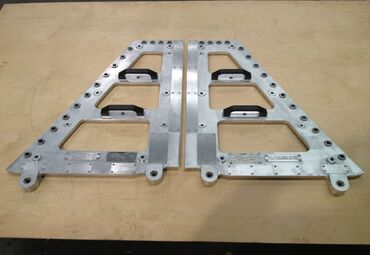
Splendid Industries: Jig & Fixture
In the contemporary manufacturing landscape, the sophistication of production processes is as critical to competitiveness as the quality of the finished product. Among the many support technologies that enable modern industry to meet demanding standards of precision, repeatability, and productivity, jigs and fixtures occupy a central role. Often overlooked outside technical circles, these devices are integral to machining, assembly, welding, inspection, and other production operations. This essay examines the nature and purpose of jigs and fixtures, their historical evolution, key design principles, applications across industries, economic and quality impacts, manufacturing challenges and innovations, and the future outlook for this foundational class of tooling.
Defining Jigs and Fixtures
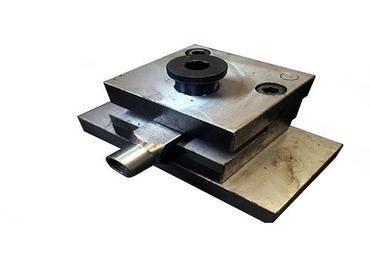
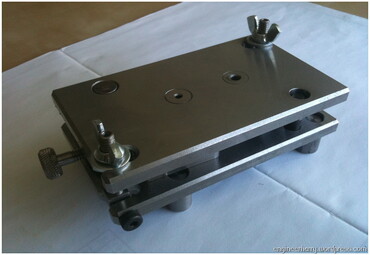
At their core, jigs and fixtures are workholding and guiding devices used to locate, support, and secure workpieces, to ensure correct relationship between the tool and the workpiece, and to facilitate efficient, repeatable operations. While the terms are sometimes used interchangeably in casual conversation, there is a technical distinction:
Jig: A device that both locates and holds a workpiece and also guides the cutting or forming tool. Classic examples include drill jigs that guide drill bits to produce correctly positioned holes.
Fixture: A device that locates and supports the workpiece but does not guide the tool; the tool’s motion is controlled by the machine. Fixtures are widely used in milling, grinding, turning, and welding operations.
Both classes of tooling may incorporate features for clamping, indexing, quick-change setup, and integration with measurement or sensing equipment. They may be bespoke for a single part or modular to accommodate families of parts. Materials range from steel and aluminum to tool steels, composites, or polymeric materials where appropriate.
Historical Context and Evolution
The concept of workholding predates industrial manufacturing; craftsmen historically used jigs and simple fixtures (clamps, patterns, templates) to reproduce parts. The Industrial Revolution brought mechanized tools and mass production, amplifying the need for standardized tooling to deliver uniform products. The emergence of interchangeable parts in the 19th century made precise location and guidance indispensable. In the 20th century, as machine tools became more accurate and production volumes grew, jigs and fixtures matured into engineered devices subject to formal design methodology.
Later advancements—such as numerical control (NC) and computer numerical control (CNC) machines—shifted some functions traditionally handled by jigs (tool guidance) back into the machine, altering the balance between jigs and fixtures. Nevertheless, fixtures remained essential for rapid, repeatable setups, especially in multi-operations and assembly contexts. In recent decades, the introduction of modular tooling systems, quick-change pallets, advanced clamping technologies, and integration with automated handling systems has expanded the capability and reduced the lifecycle cost of jigs and fixtures.
Design Principles and Best Practices
Designing effective jigs and fixtures requires balancing precision, rigidity, ergonomics, safety, manufacturability, and cost. Key principles include:
Location and Datum Control: Establishing clear datums and constraining workpiece degrees of freedom in a deterministic manner. Proper use of locating pins, surfaces, and V-blocks ensures repeatable positioning.
Clamping and Rigidity: Clamps must hold the workpiece securely against cutting or joining forces without introducing distortion. Clamping mechanisms should be fast, reliable, and, where possible, avoid interference with tool paths.
Accessibility and Visibility: Fixtures should permit required tool access and provide visibility for operators and inspection equipment. Design should minimize obstruction while maintaining support.
Repeatability and Tolerance Stack Management: Designers must account for cumulative tolerance effects from the fixture, workpiece, and machine tools to ensure final part conformity.
Safety and Ergonomics: Reducing operator strain, preventing pinch points, and ensuring safe ejection or handling of parts are essential.
Ease of Setup and Changeover: Quick-release clamps, modular locating elements, and standardized interfaces reduce downtime. For small batch production, flexibility and rapid reconfiguration are valuable.
Maintenance and Durability: Materials and surface treatments should withstand shop environments and maintain accuracy over time.
Cost-Benefit Considerations: The investment in a jig or fixture should be justified by productivity gains, quality improvements, or reduced cycle time. For very low-volume or prototype operations, simpler or temporary fixtures may be appropriate.
Types and Features
Jigs and fixtures come in many forms depending on their application:
Drill Jigs: Plate or box-type fixtures with bushings to guide drilling tools precisely.
Milling Fixtures: Designed to hold parts during milling; may include tombstones or pallet systems for high-volume machining.
Welding Fixtures: Hold and position components for welding, ensuring correct alignment and minimizing distortion—often with clamps that allow access for welding torches.
Inspection Fixtures: Provide repeatable positioning for gauging and automated measurement systems.
Assembly Fixtures: Support and orient components during fastening, bonding, or press-fitting operations.
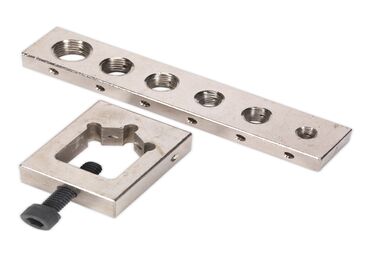
Modular Fixture Systems: Use removable locating blocks, clamping elements, and standardized bases to build flexible setups.
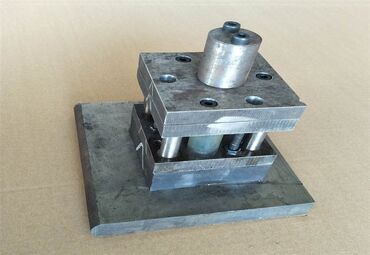
Speciality Fixtures: For forming, stamping, or press operations, including progressive dies and tooling for high-speed production.
Industries and Applications
Jigs and fixtures are ubiquitous across manufacturing sectors:
Automotive: High-volume engine, transmission, and body component machining rely heavily on fixtures. Welding fixtures for body-in-white, assembly fixtures for subassemblies, and inspection fixtures for QC are commonplace.
Aerospace: Tight tolerances and stringent certification requirements drive use of precision fixtures for structural components, composite layup tooling, and inspection fixtures for airframe elements.
Medical Devices: Small parts and implantable devices demand precise fixtures for micro-machining and inspection.
Electronics: Fixtures for PCB drilling, component assembly, and test engagement are essential in electronics manufacturing.
Tool and Die: Fixtures support grinding, EDM, and machining tasks required for die production.
Energy and Heavy Equipment: Large fixtures hold heavy components for machining and assembly, with emphasis on rigidity and safety.
Economic and Quality Impacts
The strategic use of jigs and fixtures yields multiple benefits:
Improved Productivity: Reduced setup and cycle times, ability to run operations with less skilled labor, and facilitation of automated processes.
Enhanced Quality and Consistency: Fixed datums and repeatable clamping reduce variability and defects, improving first-pass yield.
Cost Reduction: Lower scrap rates, less rework, and more efficient flow translate to lower unit costs over production runs.
Scalability: Well-designed fixtures enable scaling from prototype to mass production, including integration with robotic handlers and automated lines.
However, there are costs and trade-offs: initial design and fabrication expenses, inventory of fixtures for variant parts, engineering lead times, and maintenance needs. Optimal fixture strategy balances these investments against the expected production volume and quality requirements.
Manufacturing Challenges and Solutions
Several challenges arise in the design and use of jigs and fixtures:
Complex Geometries: As products incorporate freeform surfaces and complex assemblies, devising stable, non-distorting locators can be difficult. Solutions include custom-shaped supports, conformal fixtures (e.g., additive-manufactured supports), and vacuum-based holding for delicate parts.
Material Deformation: Clamping can induce stresses or distortions in thin-walled or polymeric components. Employing low-pressure clamps, distributed supports, or adaptive clamping mitigates these effects.
High-Mix, Low-Volume Production: Traditional bespoke fixtures are uneconomical for diverse product lines with small batches. Modular fixturing systems, soft jaws, and digitally driven flexible tooling reduce setup costs.
Integration with Automation: Aligning fixture interfaces with robot end-of-arm tools, vision systems, and PLCs requires standardized datum and repeatable interfaces. Collaborative design between tooling and automation engineers is vital.
Measurement and Traceability: Linking fixtures with in-line inspection or digital twins enhances quality control. Fixtures designed to accept sensors or metrology probes enable automated verification.
Innovations and Technological Trends
The field of jigs and fixtures has been shaped by several technological trends:
Additive Manufacturing (AM): 3D printing allows rapid production of complex, lightweight, and conformal tooling that would be costly or impossible with conventional methods. AM fixtures are used for low-volume, complex shapes and to produce integrated channels for vacuum or cooling.
Digital Design and Simulation: CAD/CAM, finite element analysis (FEA), and virtual assembly tools permit testing of fixture designs for stiffness, clamping forces, and interference before physical fabrication, reducing iteration.
Modular and Reconfigurable Systems: Standardized modular components and quick-change bases shorten changeover time and support product variants.
Smart Fixtures: Embedding sensors (e.g., strain gauges, displacement sensors, RFID) into fixtures enables condition monitoring, process verification, and traceability. Smart fixtures can detect misloads, clamp failures, or part presence.
Integration with Industry 4.0: Fixtures that communicate with production control systems support automation, predictive maintenance, and data-driven continuous improvement.
Composite Tooling and Lightweight Materials: Use of high-strength polymers, carbon-fiber composites, and engineered plastics reduces fixture mass for robotic handling while retaining necessary stiffness.
Case Studies (Representative Examples)
Automotive Drilling Line: A manufacturer of structural automotive components implemented precision drill fixtures with quick-change modular bases. Result: 40% reduction in setup time, improved hole positional accuracy, and increased throughput.
Aerospace Composite Layup: An aerospace supplier used additive-manufactured conformal tooling for a complex composite fuselage section. Benefits included reduced tooling lead time, improved fit-up, and lower tooling mass that simplified handling.
Medical Device Micro-Machining: A producer of surgical instruments employed micro-fixtures with kinematic locators and low-profile clamping, achieving higher first-pass yield and reduced operator dependency.
Design and Manufacturing Workflow
A typical jig/fixture development workflow includes:
Requirements Analysis: Define part geometry, tolerances, process forces, batch size, handling requirements, and safety considerations.
Conceptual Design: Select type (jig vs. fixture), locator strategy, and clamping approach. Consider modularity and tooling reuse.
Detailed Design: CAD modeling, tolerance analysis, selection of materials, and development of clamping and indexing mechanisms.
Simulation and Validation: Virtual testing for stiffness, stress, and interference. Create checklists for accessibility, safety, and maintainability.
Fabrication: Machining, welding, additive manufacturing, and assembly of fixture components.
Trial and Debug: Validate fixture with trial runs, measure part conformity, and refine as needed.
Documentation and Handover: Produce setup procedures, maintenance schedules, and operator training materials.
Lifecycle Management: Track usage, wear, and updates; adopt continuous improvement based on production feedback.
Environmental and Safety Considerations
Fixture design must observe environmental impact and workplace safety:
Material Selection: Prefer materials that balance durability with recyclability where feasible.
Energy and Waste: Efficient fixturing that reduces scrap lowers environmental footprint. AM can reduce material waste for complex parts.
Operator Safety: Guards, interlocks, ergonomic heights, and safe clamping mechanisms protect operators. Proper training minimizes accidents.
Regulatory Compliance: In industries like aerospace and medical devices, fixtures and their use must support traceability and compliance with regulatory frameworks.
Great Technology
Greater adoption of additive manufacturing for bespoke and low-volume fixtures, enabling rapid iteration and complex geometries.
Delivery On Time
Wider use of smart fixtures with embedded sensors providing real-time feedback that links to manufacturing execution systems (MES) and supports closed-loop control.
Certified Engineers
Increased modularity and standardization of fixture interfaces to support flexible production lines and robotic integration.
Best Branding
Application of machine learning to fixture design optimization, predicting wear and scheduling maintenance.
Planning & Strategy
Advancement in soft and adaptive fixturing—using compliant mechanisms or active positioning—to accommodate delicate or variable parts without damage.
-
Engineering & Builders
-
Metal Factory & Engineering
-
Robotics & Oil Industry
-
High Rated Load
-
Globally Stable Partner
Any questions? We're here to help...
Proactively envisioned multimedia based expertisee cross-media growth strategies. Seamlessly visualize quality intellectual capital without superior collaboration and idea-sharing.
Proactively envisioned multimedia based expertisee cross-media growth strategies. Seamlessly visualize quality intellectual capital without superior collaboration and idea-sharing.
Proactively envisioned multimedia based expertisee cross-media growth strategies. Seamlessly visualize quality intellectual capital without superior collaboration and idea-sharing.